Some random thoughts that spurred from my (discarded) attempt to get a sweet deal on a new laptop.
Every year around this time, retailers bring out discounts and deals to capitalize on and incentivize the holiday spending. I’ve also been thinking about getting a new laptop during this year’s Black Friday sales.
My current laptop is an Alienware I purchased way back in 2019. It weighs a hefty 9.74lb (4.42kg) and has an absolute brick of a power adapter. The combination of both means lugging the thing around anywhere is a chore. The battery has been replaced (by myself) once and the current one can’t even support more than 10 minutes of usage without being plugged in.
As a result, it doesn’t really function like a laptop. Rather, it sits on my desk in the study most of the times. Sometimes I wish I could take it to the living room or sit on the couch or be on the terrace and still be able to work on it.
To add to the problems, the C drive has the available space of less than 10 G out of a total of 220. This is the consequence of me installing software over the years without carefully designating the location of installation. I was a bit more careless than I’d like to admit a few years back.
Another compelling reason for an update is I’ve been wanting to try out Apple’s macOS and have the complete Apple suite that works seamlessly between my other devices, which are all Apple products. And the more I work with Linux CLI during my work the more compelling it is for me to be able to do that at home.
To be honest, I actually pulled the trigger last year for a MacBook Pro with the M3 pro chip. The trigger for me was that I wanted to get the ChatGPT desktop, which at the time was only available to the macOS. I know, kind of a ridiculous trigger, but the reasons I mentioned above, especially the weight and the Apple suite thing played a crucial part as well.
But days after I bought it, Apple announced the new Pro with the M4 chip. Although I didn’t really mind it at first- I got a decent deal (probably because it was going out) and I don’t really care for the update- but the thought that I bought something that was going out was kind of a bummer. Plus it was still within the two weeks return period. So I wiped the system and returned it. I didn’t really miss it.
Fast forward to this year. I saw deals again on websites with some additional deals that could be combined to get a Mac for almost half the price. That sounds like a great deal! I was ready to get it, to replace this hunk that I’m typing on right now for something lighter, sleeker, and better integrated.
But then I wasn’t able to do the pay in 4 to get that combo deal. I tried yesterday and I tried again today. I put money in the account so that the cash balance itself is sufficient for the purchase. I validated my face and my driver’s license. I verified that my social is on there. But still, the algo decided that perhaps because I haven’t used the app for a good 2 or 3 years now, I’m no good for the BNPL thing.
This kind of gave me pause.
Deals and discounts are naturally appealing to us. When we see that big red number saying 20% off, it’s hard not to be tempted to think that if we buy it with the discount, we instantly make 20% of the original MSRP of the thing. Even though you still have to pay a few hundred, psychologically you feel like you’ve made a profit, because you got something for less than its “worth”.
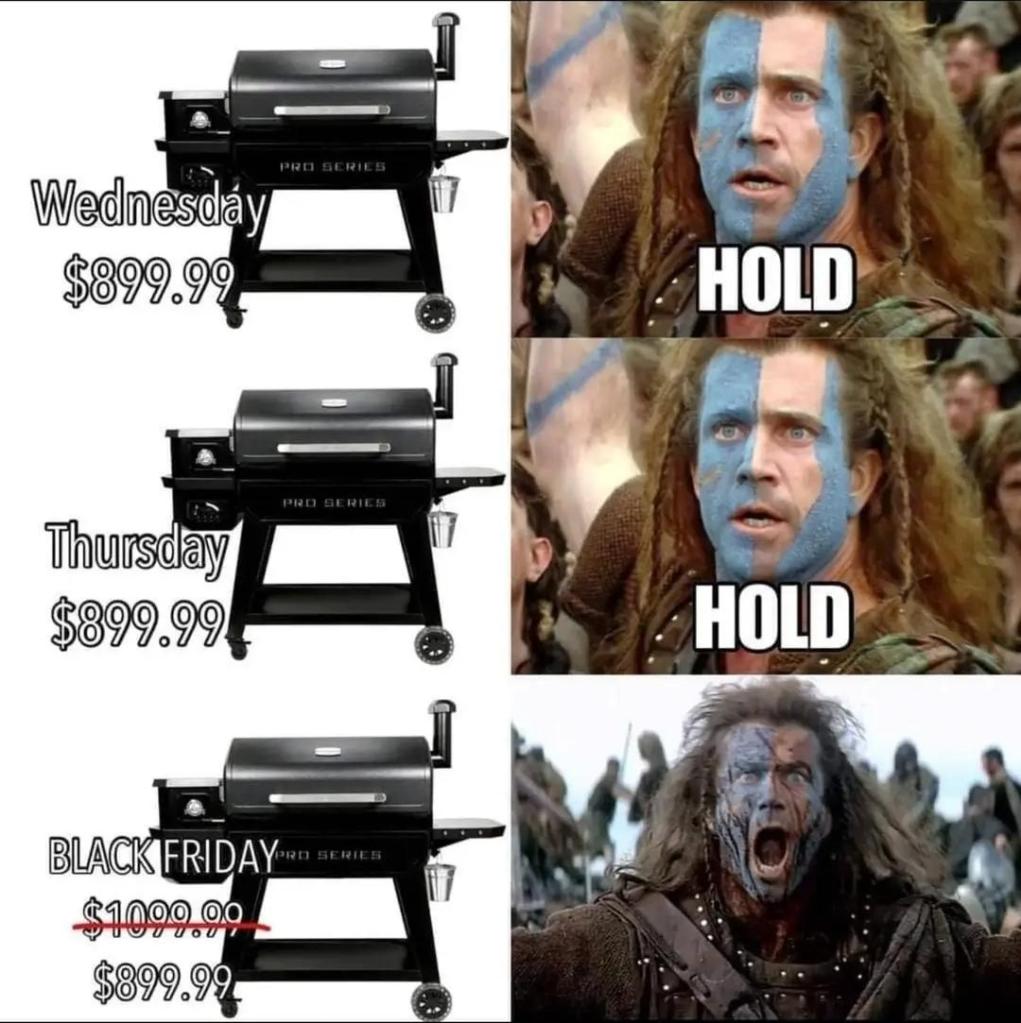
This is a very effective way for retailers and merchants to promote sales. A well-known joke is that the sellers just simply mark up the MSRP for the product and then discount it by 20% and even if the price is actually the same, you as a potential buyer are more likely to be interested.
Consumerism is something that has already been talked about to death. It was when I was back in high school more than a decade ago that I was first introduced to this idea of a society built on consumption, that “you are what you buy”.
We are constantly bombarded by advertisements pushing various products and how they make your life better. They create a vision for you to see yourself being happier with the products. Or perhaps they say “the smart and successful people are using it too, and with this new generation of [insert name], you will look as smart and successful as they are!”
I’m not saying that the products are bad or not worth their price.
A new smart phone today can do things a computer can a few years ago and for maybe half the price when adjusted for inflation. The average normal car today has probably the same power as sports cars of decades ago, while sports cars today, well they have the power of super cars of the last millennium.
But with this comes a lot of stuff and features that you probably don’t really need. Sometimes, it even becomes a burden.
A sports performance car like a BMW M3 nowadays costs nearly $100k and has the performance matching some super cars years ago. It’s a blast to drive it on the track as it is so capable. But most owners of such cars won’t even drive on the track once, because the wear on the car is real, and being heavy and powerful like they are now, the consumables have gone much more expensive.
But then on the streets, you have way too much power to enjoy it without endangering others and losing your license. So what is even the point if you bought something, only to use 20% of its potential? Even though I like the products maybe for its capability and its looks and how it feels, it just seems like such a waste, both monetarily and engineering-wise. Or perhaps are we simply buying it to show others we can afford it?
The innovation is real.
With consumerism, manufacturers are constantly looking for ways to compete. They have to bring out the best products. Every new iPhone is the best iPhone, “the one you will need that will do everything”. But every year, there will be a new, better iPhone, that “redefines everything” again. Maybe some years it’s minor tweaks and upgrades, but most of the times there indeed are something new under the hood. Our phones and cars and computers for example are light years more capable than decades or even years ago.
A Motorola of the 90s can text and call (don’t quote me, I was still very young back then), essential jobs for a phone. An iPhone today can text, call, send and receive emails, scroll the internet or social media, take photos and videos with the quality similar to cameras two decades ago, play video games that was once only ran on dedicated gaming consoles, and run AI models that can perform various tasks.
The newest innovation, one that has been on everyone’s mind, is of course, AI or I still like to call LLM. So far chatbots have successfully invaded our life (at least that’s the case for me, although this post has been written entirely without the help of chatbots), and we’ve seen how capable they can be on certain tasks like summarizing large bodies of texts and coding to a good extent. But there has been a growing concern that whether and when the AI models can really provide a true productivity boost and also bring earnings for the hyper-scalers, to justify the immense amount of investments.
I wouldn’t classify this innovation as one that is driven purely by competition for consumers. But behind every innovation, there’s that drive to make something better, even if the current one is good enough, and we as humans live perfectly in the old ages with horses and carriages and without the internet.
Consumerism is also generally good for the economy as well.
One thing that I think sets the US apart from rest of the world’s economy, is just how strong its consumers are, how incredibly willing people are to spend, even if that means borrowing money. This might not bode well for any individual consumer, especially the struggling kind, but as a whole, it provides strength to the economy.
The best outcome for an economy under capitalism is for every one to not save anything, and instead spend all the money they get, so that merchants and retailers can sell the goods, pay their suppliers and manufacturers, and the manufacturers will be able to employ the consumers so they keep on spending and the cycle can sustain itself.
But the problem is if you have more money than you can spend, what you save or invest means less money for someone else to spend. Conceptually, this means that there must be a growing deficit in aggregate to offset this, in the form of debt.
And then what happens if the consumers because more and more unwilling to spend? Worse, what if they are so tapped out, that even if they wish to spend, the leverage they have put on themselves has restricted further spending, through perhaps a declined credit card or purchase?
Eventually, I decided against buying that new MacBook. Partly because I couldn’t get a sweet of a deal I imagined I would (anchoring I know), but also because I don’t really need it. Having the laptop sit at a set place isn’t really a problem. I can delete some files and uninstall some software so that my C drive has more space. A better integration with my other Apple devices is nice to have but one that hasn’t really bothered me. Plus, I work from the office 5 days a week 10 hours a day, and for gaming duties I have my PS5. And really the Alienware works perfectly fine for my use case.
The only thing I bought today, was a phone case for my almost 3 years old iPhone 14pro, because its back plate has broken in a small spot that exposes the internals. I broke the back panel 2 years ago in November of 2023 and it hasn’t be a bother at all. I only bought the case because I don’t want water to get into the internals. I hope I can get another year or two of life out of it. The new iPhone 17pro is nice, but it’s aluminum and dents too easily. And really my current one works perfectly fine for my use case.
Happy holidays.
The Ephemeral Tourist
November 27th. 2025 @ 9:44pm CST
 The Ephemeral Tourist